Marine valves are critical components in the design and operation of maritime systems, ensuring the safe and efficient control of fluid flow in ships, offshore platforms, and subsea infrastructure. These specialized valves are engineered to withstand harsh marine environments, including exposure to saltwater corrosion, high-pressure conditions, and dynamic mechanical stresses. Their reliability and performance are paramount to the functionality of propulsion systems, ballast control, fuel management, and safety-critical operations such as fire suppression and emergency shutdowns.
Classification and Applications
Marine valves are categorized based on their design, function, and application-specific requirements:
Ball Valves: Known for their robust sealing capabilities and low maintenance, ball valves are widely used in fuel lines and hydraulic systems due to their quarter-turn operation and resistance to abrasive media.
Gate Valves: Ideal for on/off control in large-diameter pipelines, gate valves are commonly employed in ballast water management systems and cargo transfer operations.
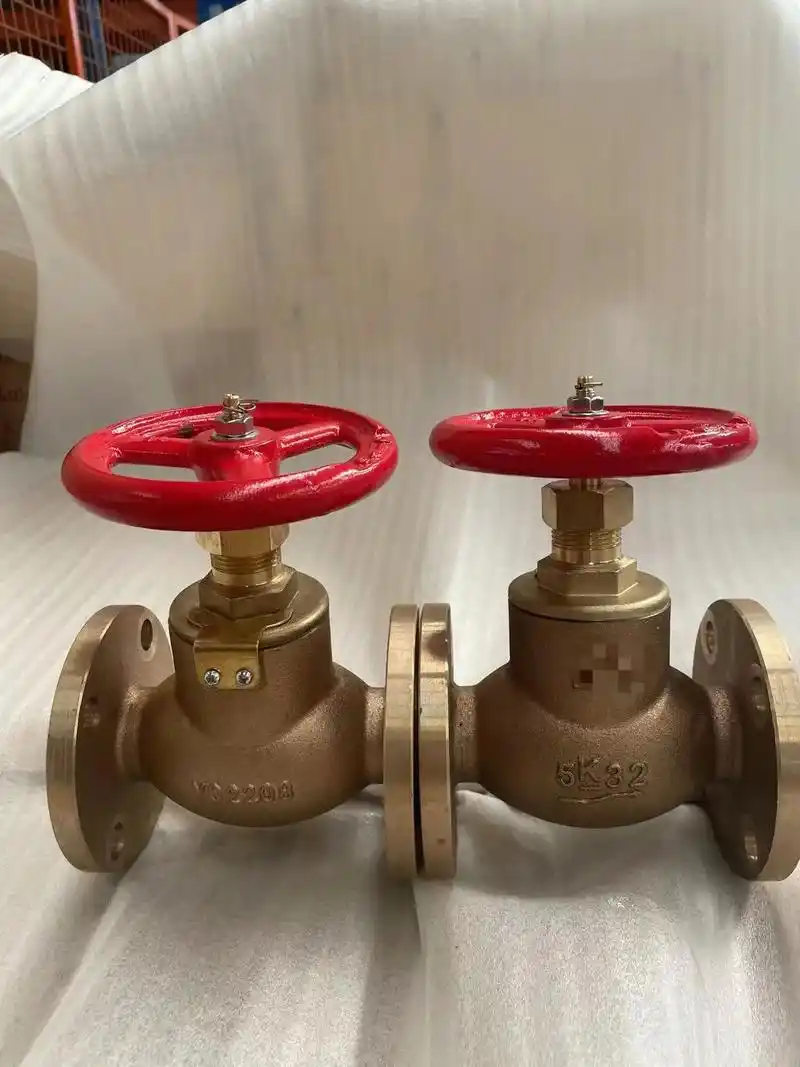
Globe Valves: Designed for precise flow regulation, globe valves are utilized in steam and chemical processing systems where throttling is required.
Check Valves: Prevent backflow in critical systems such as fire-fighting lines and pump discharge circuits, ensuring unidirectional fluid movement.
Butterfly Valves: Lightweight and compact, butterfly valves are preferred in ventilation systems and HVAC applications aboard vessels.
Technical Challenges and Innovations
The marine environment imposes unique challenges on valve design, necessitating advanced engineering solutions:
Corrosion Resistance: Exposure to seawater demands materials such as stainless steel, duplex alloys, or nickel-based superalloys to mitigate degradation.
Pressure and Temperature Tolerance: Deep-sea and high-temperature applications require valves with reinforced sealing mechanisms and thermal insulation.
Acoustic Performance: Flow-induced noise (flow noise) in valves can compromise crew safety and equipment integrity. Recent studies, such as the comparative analysis by Liu et al. (2019), highlight the use of numerical simulations (e.g., CFD with Fluent) to optimize valve geometries and reduce acoustic emissions. Ball valves, in particular, have demonstrated superior sound-dampening properties compared to other types.
Smart Integration: Modern marine valves increasingly incorporate intelligent controllers and IoT-enabled sensors for real-time monitoring, predictive maintenance, and automated flow management.
Standards and Certifications
To ensure compliance with international maritime regulations, marine valves must adhere to stringent standards such as:
DNV GL (Det Norske Veritas): Guidelines for offshore and shipbuilding safety.
ISO 15848: Standards for fluid power systems and noise emission testing.
API 6D/6A: Specifications for pipeline and wellhead valves in offshore drilling.
ABS (American Bureau of Shipping): Rules for material selection and structural integrity.
Conclusion
Marine valves represent a cornerstone of maritime engineering, blending mechanical precision with material science and digital innovation. As the shipping industry evolves toward greener technologies and autonomous systems, the demand for high-performance, energy-efficient valves will continue to grow. By leveraging cutting-edge research—such as acoustic optimization through numerical simulations—and adhering to global certification frameworks, engineers can drive advancements in marine valve technology to meet the challenges of tomorrow’s seafaring demands.
