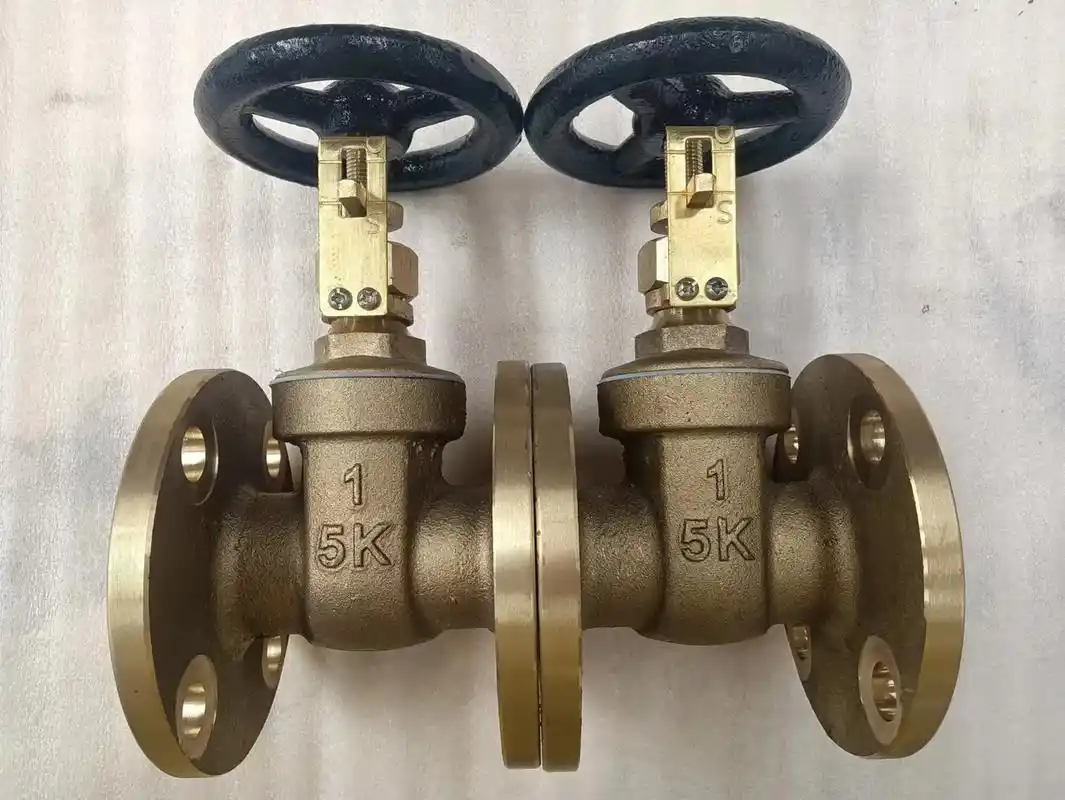
|
Marine Valves: Acoustic Performance Analysis and Technological AdvancementsMarine valves play a critical role in the fluid systems of ships and offshore structures, ensuring the safe and efficient control of liquid and gas flow. This article reviews the acoustic performance of marine valves, focusing on flow-induced noise and its mitigation strategies. By leveraging numerical simulations and comparative analysis, we evaluate the sound characteristics of different valve types (e.g., ball valves, globe valves, and butterfly valves). Additionally, we discuss recent advancements in AI-driven tools, such as Google Scholar’s integration of the Gemini model, to enhance research accessibility and data interpretation in marine engineering. 1. Introduction Marine valves are essential components in shipboard piping systems, regulating pressure, flow rate, and direction of fluids under dynamic maritime conditions. However, their operation often generates flow-induced noise, which can lead to structural vibrations, equipment damage, and acoustic pollution in marine environments. Over the past decade, numerical simulations and experimental studies have become pivotal in optimizing valve designs for improved acoustic performance. This article synthesizes findings from recent research, with a focus on the work of Liu et al. (2019) and the evolving role of AI in marine engineering research. 2. Acoustic Challenges in Marine Valves Flow-induced noise in marine valves arises from turbulence, vortex shedding, and cavitation, particularly under high-pressure differentials or turbulent flow regimes. Key challenges include: Noise Propagation: Sound waves generated in valves can propagate through piping systems, causing resonance and structural fatigue. Cavitation: In subcritical flow conditions, vapor bubbles collapse near valve seats, producing impulsive noise and material erosion. Regulatory Compliance: International maritime standards (e.g., ISO 13373) mandate noise control to ensure crew safety and environmental protection. 3. Numerical Simulation and Comparative Analysis Liu et al. (2019) conducted a comparative study using ANSYS Fluent, a computational fluid dynamics (CFD) tool, to analyze the acoustic performance of three valve types:
Ball Valves: Demonstrated the lowest noise levels due to streamlined flow paths and minimal turbulence. Globe Valves: Produced higher noise due to complex internal geometries and abrupt flow direction changes. Butterfly Valves: Showed moderate noise levels but were susceptible to vortex shedding at partial openings. The study emphasized the importance of geometric optimization and material selection (e.g., high-damping alloys) to reduce acoustic emissions. For instance, ball valves with reinforced PTFE seals exhibited a 15–20% reduction in noise compared to conventional designs. 4. AI-Driven Research Tools in Marine Engineering Recent advancements in artificial intelligence (AI) have revolutionized academic research, including marine engineering. Google Scholar’s integration of the Gemini model (Google, 2024) exemplifies this shift: Automated Literature Summarization: Gemini can extract key findings from technical papers, such as Liu et al. (2019), and generate concise summaries for researchers. Citation Network Mapping: The tool converts in-text citations into hyperlinks, enabling seamless navigation to source papers and contextualizing prior work. Predictive Modeling: AI-driven simulations now predict noise patterns in valve designs, reducing the need for costly physical prototypes. These innovations align with the goals of Google Scholar’s co-founder, Anurag Acharya, to democratize access to scholarly resources while enhancing the efficiency of literature review and data analysis (Google, 2024). 5. Conclusion and Future Directions Marine valves must balance functional reliability with acoustic performance to meet modern maritime demands. Numerical simulations remain indispensable for optimizing designs, while AI tools like Gemini are transforming how researchers access and interpret data. Future work should explore: Hybrid valve designs combining the advantages of ball and butterfly valves. Integration of smart sensors for real-time noise monitoring and adaptive control. Global collaboration platforms leveraging AI to aggregate and standardize marine engineering datasets. By bridging computational modeling and AI-driven insights, the marine engineering community can address acoustic challenges more effectively, ensuring safer and quieter maritime operations. |